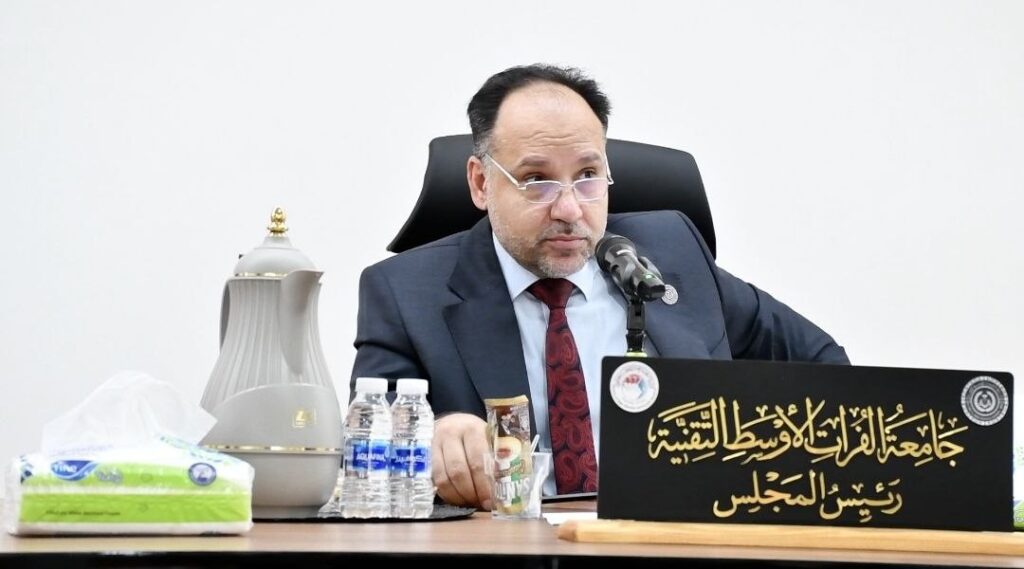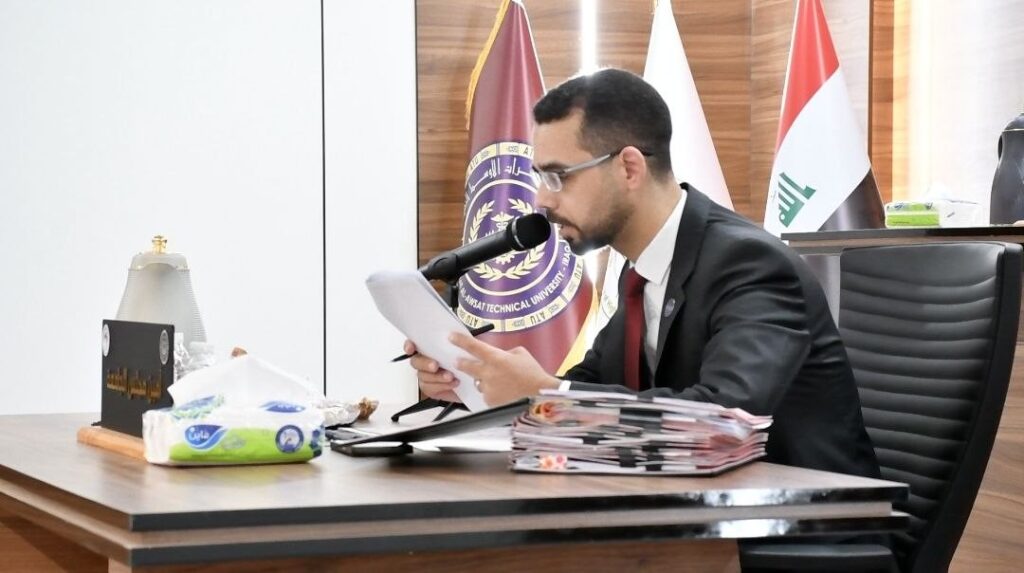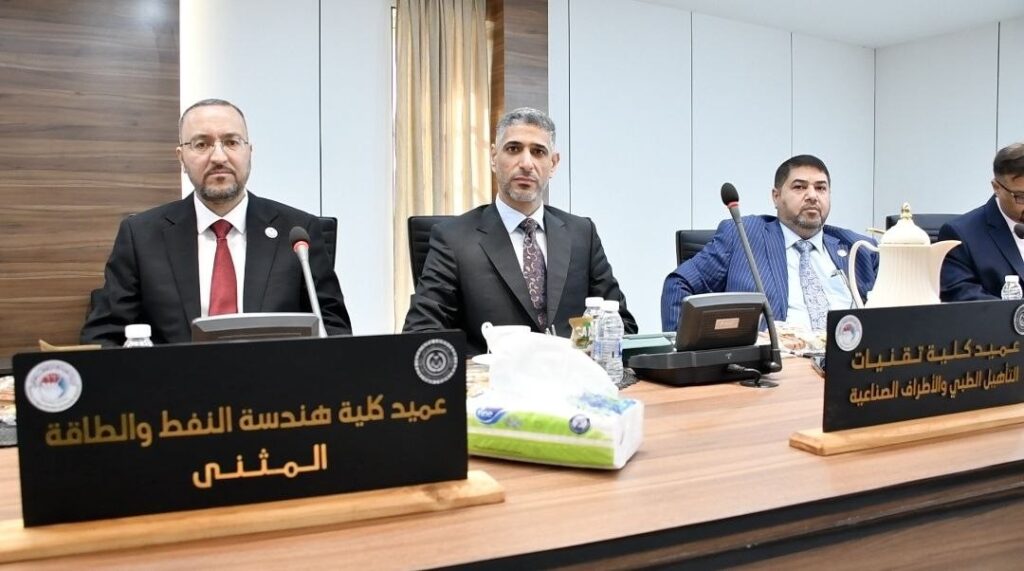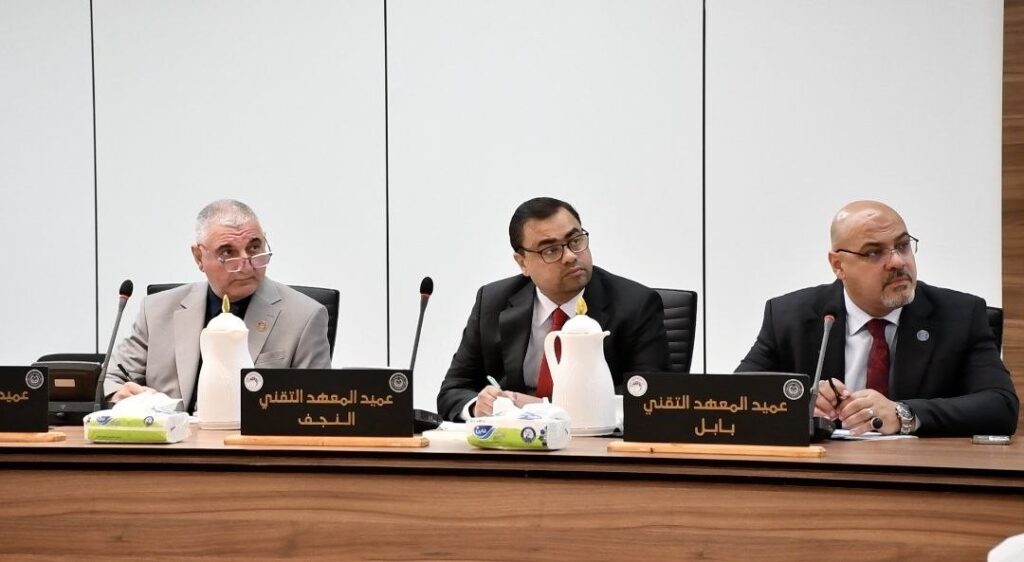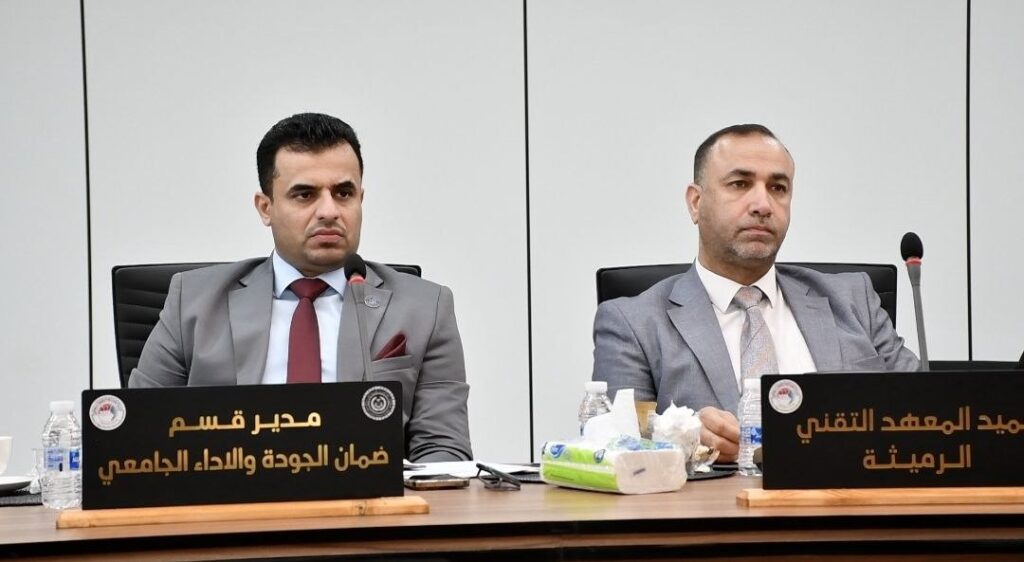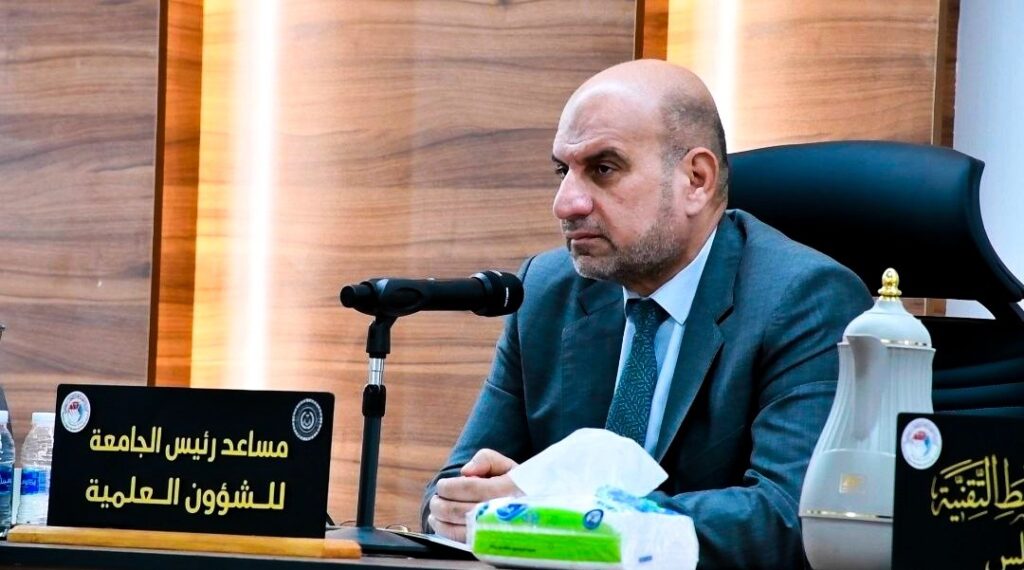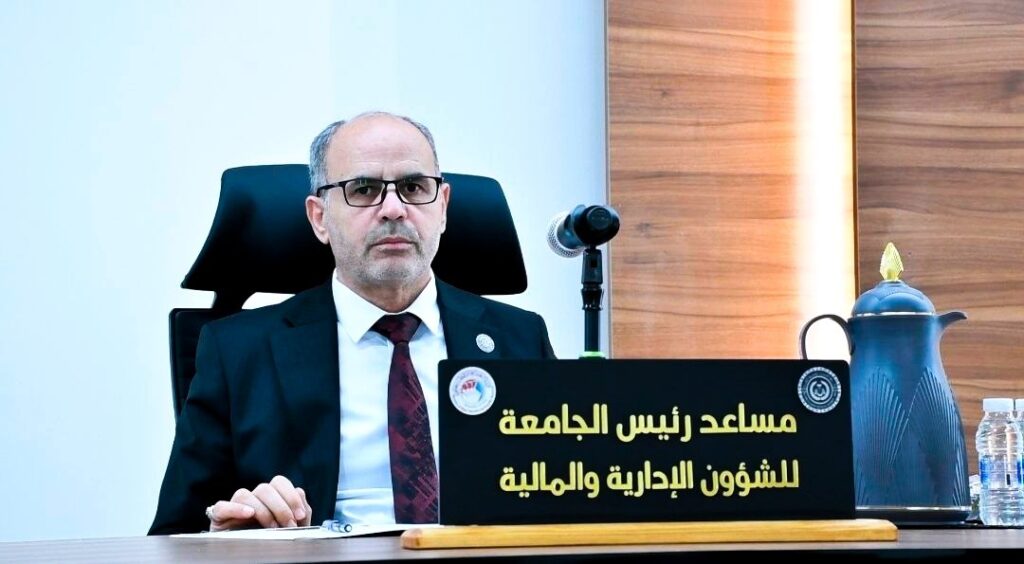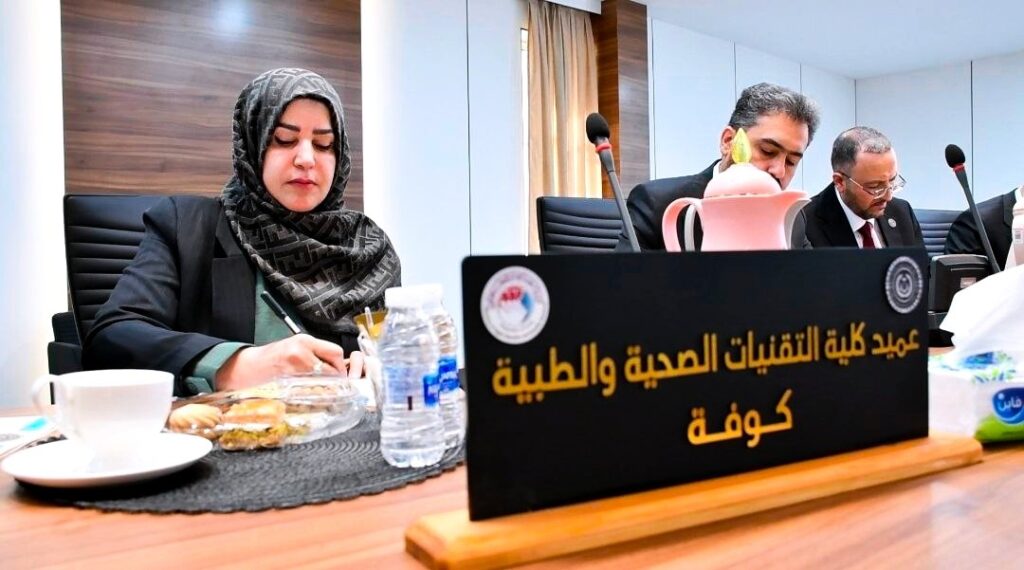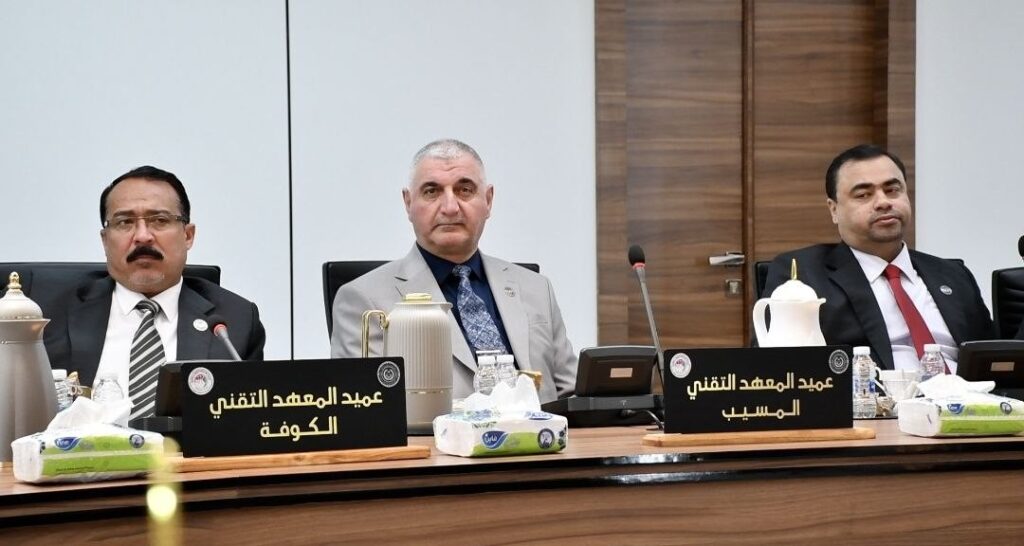
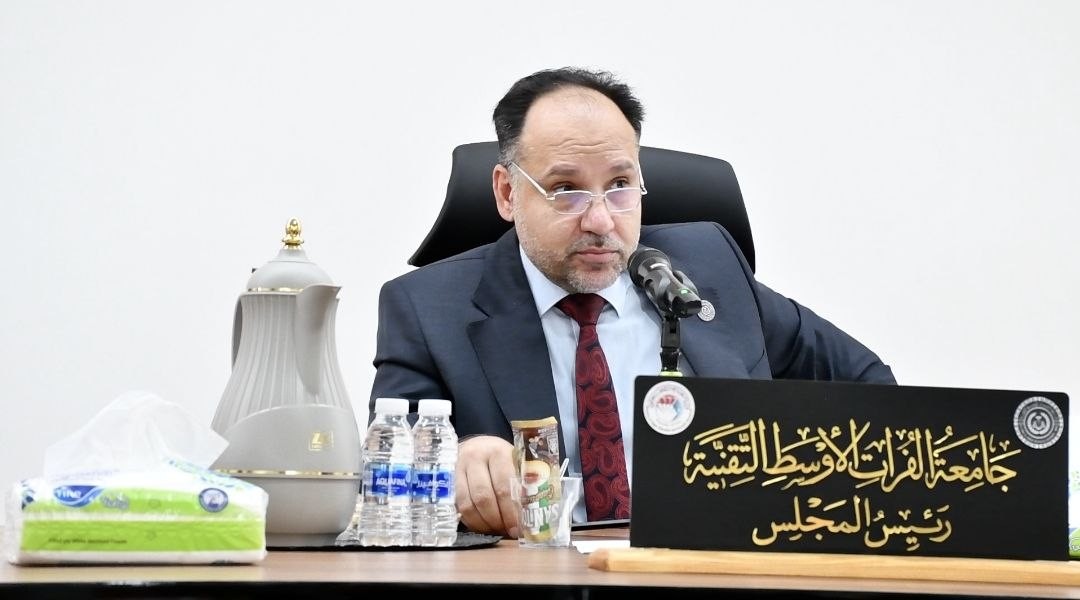
The Board of Directors of Al-Furat al-Awsat Technical University held its seventh session for the 2025–2026 academic year in the university council hall on the Kufa campus, chaired by President Prof. Dr. Hassan Lateef Kazem Al-Zubaidi, with all board members present and several relevant department directors in attendance.
The meeting began with a recitation from the Qur’an by Assistant Lecturer Muin Al-Rubaie, followed by Al-Fatiha for the souls of the martyrs.
The university president reviewed the minister’s directives from the recent advisory board meeting and instructed deans to implement them, emphasizing the following:
1- Prioritizing modern technological applications and digital transformation, especially the university website.
2- Strengthening institutional performance and quality assurance across all university institutions.
3- Engaging with private-sector companies and meeting their needs through high-quality graduates, while aligning work with existing administrative laws.
4- Focusing on sustainable development, with particular attention to green economy indicators.
He also stressed the need to:
1- Achieve integration with sectoral institutions by creating specialized studies and institutes in vital fields that meet community needs and sustainable development goals.
2- Monitor the conduct of second-semester teaching and examinations and ensure necessary preparations for successful exam administration.
3-Activate partnerships with the labor market, including the private sector, to update curricula and develop programs that satisfy market demands.
4- Track and document activities related to sustainable development to strengthen the university’s standing in local and international rankings.
5- Stimulate research activity and ensure implementation and periodic review of the scientific plan’s components.
The council reviewed and discussed the items on the agenda, notably the institutional accreditation file, viewed as a core pillar for enhancing education quality and achieving academic excellence locally and internationally.
Assistant Professor Dr. Hussein Awad Al-Obaidi, Director of the Quality Assurance and University Performance Department, presented a detailed report outlining measures taken to meet institutional accreditation requirements per the Ministry of Higher Education and Scientific Research standards, as well as progress percentages across various quality domains.
The board urged intensified efforts to complete the accreditation file within set timelines and called for coordinated work among colleges, institutes, and the Quality Assurance Department to attain the highest levels of institutional performance.
This direction aligns with the university’s strategic plan to secure institutional accreditation, improve its academic ranking, and boost public confidence in its educational outputs.
The council also addressed several scientific, administrative, and student-related matters and issued the necessary recommendations.